Ms. M.K. – support and safe return home

At the end of March, we were contacted about Ms. M.K., a Slovak woman who is visually impaired and has had recent mental health difficulties. She had arrived in Ireland and, shortly after, found herself completely alone at the airport, confused and without any support.

A member of the public noticed her situation and kindly helped her temporarily. From there, Barka became involved.

When we learned more about her circumstances, it was clear she was extremely vulnerable. We acted straight away to make sure she was safe and not left on her own. We contacted the relevant services, including An Garda Síochána and Slovak support agencies, and started working on a solution.

While arranging longer-term support, we ensured she remained in safe contact with our team.

Through coordination with services in Slovakia, we were able to get in touch with her sister, who confirmed she could take care of her and provide a stable home.

We organised and covered the cost of Ms. M.K.’s return journey to Slovakia. She was met at the airport by her sister and safely reunited with her family.

Ms. M.K. expressed her gratitude for the support she received.

This case shows how important quick action, cooperation between services, and simple human support can be when someone is in crisis.

A Supported Return to London – Rafat’s Story

When Rafat (77) arrived in Dublin, she was confused and disoriented. She believed she could travel overland from Ireland to Canada and did not understand that this was geographically impossible. It quickly became clear that she was extremely vulnerable.

Rafat had spent much of her adult life in London and held Indefinite Leave to Remain in the UK. She received a UK state pension and had previously lived independently. However, over time, her cognitive health had deteriorated significantly. She experienced serious memory problems, became easily disoriented, and had previously required police assistance in London after forgetting her address.

Before connecting with services, Rafat had been wandering the streets of Dublin. Due to concerns about her safety and risk of rough sleeping, she was placed in emergency accommodation. That is where Barka for Mutual Help Ireland became involved.

From our first meetings, it was clear that Rafat could not safely manage her situation alone. She forgot key information, including her room number in the hostel. She lost her bank card and did not know how to cancel it. Although articulate and personable, she struggled with practical daily tasks and orientation.

Medical assessment confirmed cognitive impairment. Both healthcare professionals and social workers agreed that she would not be able to travel independently.

Despite her confusion about Canada, Rafat was clear about one thing – she wanted to return to London, a city she knew well. She expressed a wish to access sheltered accommodation for older people and recognised that she needed support.

In cooperation with the Dublin Region Homeless Executive (DRHE) and local professionals, Barka for Mutual Help Ireland organised her supported return to the United Kingdom. This involved coordinating services in London, arranging travel, and accompanying Rafat on the journey to ensure her safety.

Without accompaniment, she would not have been able to return home safely.

Upon arrival in London, Rafat was linked with the appropriate local authority services to begin accessing accommodation and longer-term support. She expressed significant relief at being back in familiar surroundings.

Rafat’s case reflects the core mission of Barka for Mutual Help Ireland: supporting vulnerable migrants who are unable to navigate complex systems alone, and ensuring safe, dignified, and sustainable returns when appropriate.

Our work is not only about travel arrangements. It is about partnership, practical assistance, and walking alongside individuals at moments of acute vulnerability – ensuring that no one is left without support.

Visit of the Barka Team to Focus Ireland in Dublin

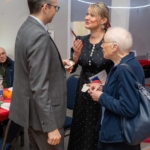
This week, the Barka for Mutual Help Ireland team visited the headquarters of Focus Ireland in Dublin. During the meeting, we had the opportunity to present our work at PACT and 15 Eustace Street, sharing our experience in supporting people in vulnerable situations, including those facing homelessness and social exclusion.

We also learned more about Focus Ireland’s current projects and initiatives, which aim to prevent and address homelessness through housing, advocacy, and support services. The exchange was a valuable opportunity to deepen our cooperation, share good practices, and explore potential areas for future collaboration.

We would like to thank the Focus Ireland team for their warm welcome and inspiring discussion. Meetings like this strengthen partnerships and help us work more effectively for people who need support.

Return & Relocation Support Programme – Annual Report 2025

Barka for Mutual Help Ireland

Return & Relocation Support Programme – Annual Report 2025

01/01/2025 – 31/12/2025

BARKA IRELAND IN NUMBERS:

TOTAL NUMBER OF RECONNECTIONS IN 2025:

131 Persons

TOTAL NUMBER OF RECONNECTIONS SINCE ESTABLISHMENT:

1238 Persons

BARKA IE: Helping People Reconnect and Reintegrate

Introduction

BARKA IE is a charitable organization based in Dublin, dedicated to assisting individuals experiencing homelessness.

Established in 2011, BARKA IE is a part of the global BARKA Network, which has branches in the UK, Netherlands, Belgium, and Iceland, with its origins in Poland. The organization was founded in response to the rising number of Central and Eastern European migrants living on the streets of Ireland, struggling with homelessness and substance abuse.

Mission and Approach

BARKA IE aims to provide sustainable solutions for people experiencing homelessness. The organization primarily focuses on helping individuals reconnect with their home countries and socially reintegrate. This is facilitated through the extensive support network provided by the Barka Foundation Network in Poland, which offers opportunities for individuals to reunite with their families or receive help for addiction problems

Services Provided

BARKA IRELAND 4 core objectives are:

1. Provide Information, Advice and Repatriation to a person’s home Country

2. Assistance with Accessing Emergency Accommodation when required

3. Fostering Social and Vocational Integration – educational and community programs, creating workplaces and accessible housing programs (BARKA NETWORK)

4. Key Work and Case Management; Language and Translation Service


1. Overview

In 2025, 131 people were supported by Barka for Mutual Help Ireland to return to their countries of origin through structured, safe and voluntary return and relocation assistance.

The programme supports EU nationals and other migrants experiencing homelessness, housing exclusion, health crisis and social vulnerability who are unable to stabilise their situation in Ireland and choose return as their only viable pathway out of crisis.

Despite periods of limited staffing capacity, the programme maintained stable and consistent delivery throughout the year.


2. Gender and Age Profile

Category

Number

%

Men

80

61%

Women

34

26%

Children

17

13%

Total

131

100%


The profile reflects the demographic structure of homelessness in Dublin: predominantly single adult men, alongside a significant proportion of families with children, especially in cases of employer-linked or informal accommodation collapse.


3. Nationality Profile

Nationality group

Share

Romanian

32%

Polish

26%

Other EU nationals

42%


Other nationalities included German, Portuguese, Spanish, British, Irish, Hungarian, Bulgarian, Czech, Slovak, Lithuanian, Latvian, Swedish, French, Ukrainian, Norwegian and others.

This confirms that EU migrant homelessness in Dublin is multi-national, structural and growing in complexity.

4. Homelessness & PASS System

In 2025, 43 of the 131 people supported (32.8%) were registered in the national PASS (Pathway Accommodation & Support System).

However, analysis of housing situations at point of referral shows that:

Housing situation

Number

%

Rough sleeping / street homelessness

83

63.4%

Unsecured or temporary accommodation

48

36.6%

Total

131

100%


This demonstrates that nearly two thirds of all beneficiaries were sleeping rough or in street-based situations at the time they were referred to Barka.
PASS captures only part of this population. Many EU migrants cycle between
streets, Garda, hospitals, airports and informal accommodation without formal PASS registration. Barka therefore reaches a hidden homeless population that would otherwise remain outside standard service pathways.


5. Age Profile of Beneficiaries


Age range: from 0 to 82 years

Typical person supported by Barka is in their early to mid-30s, but with a very wide age spread, including children and elderly people.

Age Distribution

Age group

Number

% of total

Children (0–17)

27

18.1%

Young adults (18–24)

9

7.1%

Adults (25–34)

33

25.2%

Mid-age adults (35–49)

36

28.3%

Older adults (50–64)

20

15.7%

Seniors (65+)

7

5.5%

Total

131

100%

1 in 4 people are either children or seniors
These are
high-vulnerability groups that:

  • cannot self-resolve homelessness
  • require safeguarding, healthcare and social protection
  • face extreme risk if left in street homelessness or unstable housing

6. Referral Pathways

Referrals came predominantly from frontline emergency and statutory services:

Referral source

% of all referrals

An Garda Síochána (incl. Airport Police)

21%

MQI (incl. Lighthouse)

11.5%

Capuchin Day Centre

11.5%

Focus Ireland / Focus Family Centre

9.2%

ITAS

7.6%

Hospitals (St James’s, Beaumont, St Vincent’s)

6.1%

HSE Social Inclusion Teams

6.1%

Simon Community

4.6%

DRHE

2.3%

Prisons (Cloverhill, Dochas)

2.3%

Other NGOs

8.4%


Over 40% of all referrals originated directly from State services (Garda, HSE, hospitals, prisons, DRHE), confirming that Barka operates inside Dublin’s crisis-response system, not outside it.


7. Operational Performance

Despite staffing constraints during part of 2025, Barka delivered:

  • 131 safe and coordinated returns
  • sustained collaboration with all major homelessness and addiction services
  • strong engagement with consulates, hospitals, prisons and Gardaí

This reflects high efficiency, prioritisation of high-risk cases, and strong inter-agency trust.


8. Strategic Conclusions

  1. Return support is a homelessness intervention
    With one third of clients in PASS and two thirds sleeping rough or in street-based situations, return support has become a
    core homelessness exit pathway for EU migrants in Dublin.
  2. Demand is structural, not temporary
    The wide nationality spread and increasing family cases indicate that migrant homelessness is
    not resolving itself.
  3. The programme generates system-wide savings
    Each return prevents long-term use of emergency accommodation, hospital beds, Garda time and NGO crisis services.


9. Outlook for 2026

Based on 2025 trends, Barka expects:

  • increased referrals from Garda, hospitals and emergency accommodation
  • a higher proportion of PASS-registered EU migrants
  • more families losing housing and requiring return as the only viable option

Return support will therefore become even more critical to Dublin City Council’s homelessness and migration management strategy.


10. Final Statement

In 2025, Barka for Mutual Help Ireland supported 131 of the most vulnerable people in Dublin to exit homelessness and social crisis through safe, structured return.

With 63% coming directly from street homelessness and over 40% referred by State services, the programme is now a strategic component of Dublin’s homelessness response and a high-impact, cost-effective intervention for the City.


Success Story 1 – Nauris (Romania)

From street homelessness to family reunification

Nauris came to Ireland after being promised a job and accommodation. When he arrived in Dublin, he discovered that everything he had been told was false. For six weeks he slept on the streets, relying on soup kitchens and, for a short time, emergency night shelters. Eventually even this support ran out and he was left completely homeless.

By the time Barka met him, Nauris had visibly deteriorated. When he showed his passport – needed to arrange his return – staff could barely recognise the exhausted, bearded man he had become.

With Barka’s support, Nauris was able to return safely to Romania, where his wife and two teenage children were waiting for him. What began as a journey built on deception ended in a dignified return home.

Nauris’ story is not unique. Many EU migrants arrive in Ireland expecting stability, only to become trapped in homelessness. Barka provides a vital way out.


Success Story 2 – Małgorzata (Poland)

Escaping abuse and returning home with dignity

Małgorzata, an 83-year-old woman, was brought to Ireland by her son. Over time, his alcohol addiction led to escalating verbal and physical abuse. Eventually the situation became so traumatic that Małgorzata cannot even remember how she escaped. A neighbour intervened and helped her reach a women’s refuge.

At the shelter she received food, clothing, emotional support and medical assessment. She was later admitted to hospital, where early signs of dementia were detected. After one month, doctors confirmed she was fit to live independently and could be discharged.

The shelter contacted Barka, and Małgorzata confirmed she wanted to return to Poland. Her bank card was blocked and her son refused to help, so Barka arranged and funded her flight. With support from hospital staff and Gardaí, she was safely escorted to collect her passport and belongings and then accompanied to the airport.

Małgorzata returned to Poland, where a family member met her. She continues medical treatment, attends a senior club and is planning to learn English — something she had always dreamed of doing. She repeatedly says that Barka “saved her life”.


Success Story 3 – Jerzy (Poland)

From chronic homelessness to recovery and hope

Jerzy (59) had lived in Ireland for over 10 years. After losing his job and driving licence due to alcohol addiction, his health deteriorated and he became homeless. He was registered in PASS and lived in a hostel, but spent most days drinking in public spaces. His mobility and appearance worsened and his future looked bleak.

Barka staff kept in contact with Jerzy through day centres and street outreach, encouraging him to consider returning to Poland for treatment and stability. After many months, he agreed — as long as a Barka worker would accompany him.

Barka secured him a place at Barka in Poznań, arranged a temporary passport and travel, and travelled with him back to Poland. After rest and assessment, Jerzy was referred to a residential addiction treatment programme.

Today, Jerzy remains in regular contact. He proudly describes his new conditions as “luxurious” — including a medical bed — and is focused on achieving sobriety and reconnecting with his family. His success has already inspired another friend in Ireland to plan a return.


Christmas Eve for Socially Excluded People in Dublin – The Beginning of a New Tradition

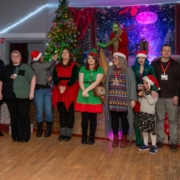
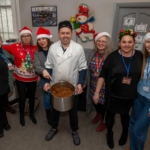
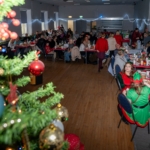
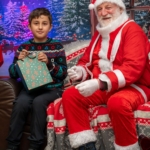
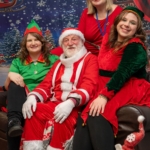
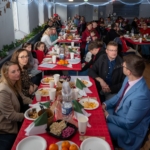
This December, the Barka for Mutual Help Ireland, in cooperation with the Consular and Polish Diaspora Section of the Embassy of Poland in Dublin, organised a Christmas Eve celebration in Dublin for people experiencing homelessness, loneliness, and difficult life circumstances. Around 150 participants gathered for an evening filled with warmth, community, and hope.

For over 30 years, Christmas Eve for those in need has been a cherished tradition of the Polish Barka Foundation, where every year around 350 people come together to share a meal, sing carols, and celebrate the true spirit of Christmas. It is a time when those who often face exclusion find companionship, dignity, and belonging.

This year, that beautiful tradition has taken root in Dublin, marking the beginning of what we hope will become a lasting annual celebration for the local Polish and Irish community.

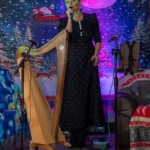
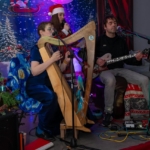
The event, held at the Polish Library Biblary, began with a bilingual welcome and greetings from invited guests, including representatives of CKU Dublin, Forum Polonia, partner organisations, and clergy. Together, participants prayed, shared the Christmas wafer, and sang “Silent Night,” creating an atmosphere of unity and peace.

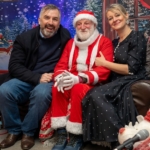
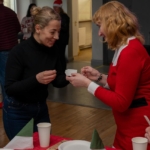
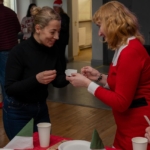
After the spiritual part, guests enjoyed traditional Polish Christmas Eve dishes — including pierogi, barszcz with dumplings, carp, and various festive salads — served in a warm, family-like setting, with carols playing softly in the background. The evening also included expressions of gratitude to volunteers, short speeches from guests, and the much-awaited arrival of Saint Nicholas.

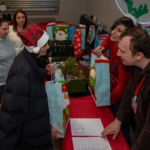
Thirty children received Christmas gifts, while adults were given festive aid packages prepared by Barka and Polish Embassy, bringing joy and comfort to those most in need. Adding to the festive spirit, students of the Polish School SEN prepared beautiful Christmas centerpieces, while participants of the Polish Leaving Certificate course (PPLI) created handmade Christmas cards with wishes for the event’s guests.

The event concluded with group photos and warm exchanges that, for many, became the most touching moment of the evening.

We are deeply grateful to all volunteers, partners, and supporters whose generosity made this event possible. Thanks to you, the Dublin Christmas Eve of 2025 became not only a night of compassion but also the beginning of a new, meaningful tradition inspired by the long-standing Polish example.

Photo: Remi Winiarski

Wigilia Integracyjna Polonii/Polish Community Christmas Eve Gathering

Fundacja Barka serdecznie zaprasza na Wigilię Integracyjną Polonii, która odbędzie się w sobotę, 13 grudnia 2025 roku, w godzinach 13:00–15:00, w Polskiej Bibliotece Biblary, 1 Library Square, Inchicore, Dublin 8, D08 PA07.
Na miejsce można łatwo dojechać autobusami 13, G1, G2 lub 68. Dla uczestników dostępny będzie darmowy parking przy bibliotece.

To wyjątkowe spotkanie będzie okazją, by spędzić przedświąteczny czas w ciepłej, rodzinnej atmosferze.
W programie znalazły się:

  • tradycyjny polski wigilijny poczęstunek,

  • wspólne kolędowanie,

  • świąteczne paczki,

  • wizyta Świętego Mikołaja. 🎅

Wigilia jest otwarta dla wszystkich członków polskiej społeczności w Dublinie i okolicach.
Zależy nam szczególnie, aby w tym wyjątkowym czasie spotkały się osoby, które być może spędzają święta samotnie lub znajdują się w trudniejszej sytuacji życiowej – to właśnie dla nich chcemy stworzyć ciepłą, serdeczną przestrzeń spotkania i wspólnoty.

📩 Zgłoszenia przyjmujemy mailowo pod adresem aneta.kubas@barkaie.org lub telefonicznie pod numerem 087 454 2653 (Aneta).
Jeśli masz pytania – śmiało pisz lub dzwoń!

Wstęp wolny.
Zapraszamy serdecznie dorosłych i rodziny.

Z życzeniami ciepła, nadziei i wspólnoty,
Zespół Fundacji Barka For Mutual Help

Barka Foundation warmly invites you to the Polish Community Christmas Eve Gathering, taking place on Saturday, 13 December 2025, from 1:00 PM to 3:00 PM at the Polish Library Biblary, 1 Library Square, Inchicore, Dublin 8, D08 PA07.
You can reach the venue by buses 13, G1, G2, or 68. Free parking is available at the library.

This special afternoon will be a wonderful opportunity to share the warmth and spirit of Christmas together.
The programme includes:

  • traditional Polish Christmas Eve dishes,

  • carol singing,

  • Christmas gift packs,

  • and a visit from Santa Claus. 🎅

The event is open to all members of the Polish community in Dublin and surrounding areas.
We especially welcome those who might be spending the holidays alone or who are in a more difficult situation — this gathering is for you. We wish to create a warm, family-like atmosphere where everyone feels included and at home.

To register, please contact us by email at aneta.kubas@barkaie.org or by phone at 087 454 2653 (Aneta).
If you have any questions, don’t hesitate to get in touch.

Free entry.
Everyone is welcome – individuals, families, and friends.

With warm regards and festive wishes,
The Barka For Mutual Help Team

Nauris came to Ireland believing in a promise

Someone had told Nauris there would be a job and accommodation waiting for him here. But when he arrived, he discovered it was all a lie. For six long weeks, he wandered the streets of Dublin — cold, hungry, and exposed to danger.

He survived thanks to soup kitchens and, for two weeks, managed to stay in night shelters. But even that came to an end. It was heartbreaking to see how much he had changed in that short time. When he showed us his passport – needed to book his flight home – we could hardly recognise him. His tired, bearded face told a story of hardship and disappointment.

With support from Barka, he was finally able to return home to Romania, to his wife and two teenage children.

Sadly, there are thousands of people like him on the streets of Dublin – drawn here by stories of easy work and a better life, only to find themselves lost and alone.

At Barka, we meet them every day. We offer help, understanding, and a way home. Because everyone deserves a second chance.

Barka for Mutual Help at the Polish Diaspora Gathering in Ireland – Limerick 2025

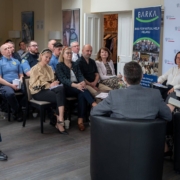
Representatives of Barka for Mutual Help took part in the Polish Diaspora Gathering in Ireland held in Limerick, where community leaders, academics, representatives of Polish and Irish institutions, and young Polish leaders came together to discuss the future of the Polish community in Ireland.

 The discussions focused on:
• the public image and civic engagement of Poles in Ireland,
• strategies and policies toward the Polish diaspora in both Poland and Ireland,
• the role of culture as a source of identity and dialogue.

An inspiring highlight of the event was an online meeting with the Speaker of the Senate of the Republic of Poland, Małgorzata Kidawa-Błońska, who emphasized the importance of the young diaspora, return programmes, and greater representation of Poles in Irish public life.

The gathering concluded with Forum Polonia workshops, where participants planned new projects and ways to strengthen cooperation among community organizations.

Barka’s representative shared our experience in social reintegration, migrant support, and building cooperation between Ireland and Poland.

Photo: Forum Polonia

Words of Gratitude from a Family Supported by Barka Ireland

At Barka Ireland, we often accompany people on some of the most important journeys of their lives — journeys of return, of recovery, of reconnection. We are honoured to share this heartfelt message of gratitude from the family of two individuals who, with our support, were able to safely return home to Poland. It is words like these that remind us why we do what we do.

(Names and personal details have been shared with the Foundation but are withheld here out of respect for privacy.)

🇬🇧  “Dear All,

On behalf of my entire family, I would like to express our heartfelt thanks to the whole team at Barka Ireland for their extraordinary support, kindness, and professionalism in helping our loved ones.

Thanks to your commitment, determination and compassionate approach, it was possible to locate and safely bring our parents back to Poland. Their return home on May 9th, 2025, was made possible not only by efficient coordination, but also by the heartfelt care you devoted to this matter.

Our special thanks go to the person who coordinated all the efforts with great dedication and effectiveness, providing care and accompanying our parents until their return.

What you have done will remain for us a true example of humanity and solidarity.

With deep respect and gratitude,

Family supported by Barka Ireland “

W Fundacji Barka Ireland często towarzyszymy ludziom w jednych z najważniejszych podróży ich życia – podróżach powrotu, odbudowy i ponownego połączenia z bliskimi.

Z dumą dzielimy się poruszającym podziękowaniem od rodziny pary, która po 10 latach życia w Irlandii miała wrócić do Polski 3 maja 2025 roku. Gdy nie pojawili się na lotnisku, ich córka rozpoczęła poszukiwania przez policję i media społecznościowe.

Na szczęście parę udało się odnaleźć na lotnisku w Dublinie i – dzięki wspólnym wysiłkom – zapewnić im bezpieczny i godny powrót do domu.

To właśnie takie historie przypominają nam, dlaczego robimy to, co robimy.

🇵🇱 “Szanowni Państwo,

W imieniu mojej rodziny pragnę złożyć serdeczne podziękowania dla całego zespołu organizacji Barka Ireland za niezwykłą pomoc, życzliwość i pełne profesjonalizmu działania w sprawie naszych bliskich.

Dzięki Państwa zaangażowaniu, determinacji oraz empatycznemu podejściu możliwe było odnalezienie i bezpieczne sprowadzenie naszych rodziców do Polski. Ich powrót do domu 9 maja 2025 roku był możliwy nie tylko dzięki sprawnej organizacji, ale też ogromnemu sercu, które włożyli Państwo w tę sprawę.

Szczególne podziękowania kierujemy do osoby, która z oddaniem i skutecznością koordynowała wszystkie działania, zapewniając opiekę i towarzysząc naszym rodzicom aż do momentu ich powrotu.

To, co Państwo zrobili, pozostanie dla nas przykładem autentycznego człowieczeństwa i solidarności.

Z wyrazami głębokiego szacunku i wdzięczności,

Rodzina osób objętych pomocą”

Barka Visit to Ana Liffey Drug Project in Dublin

Aneta Kubas from Barka for Mutual Help recently visited Dublin’s Ana Liffey Drug Project. The meeting provided an opportunity to exchange experiences, insights, and best practices in supporting vulnerable and marginalised communities.

Both organisations share a commitment to person-centred, harm-reduction approaches and community engagement. We look forward to continued collaboration and learning from each other’s work.